Cost segregation can be worth it for a single-family rental if it lowers your tax bill enough to cover the study and any extra tax-preparation work. The practical question is how much money you would keep after paying those costs, and when you would keep it.
Basis's standard study costs $1,795 per qualifying property. Before buying, compare what you would pay with a study against what you would pay without one. Then consider how taking deductions sooner could affect later years and a future sale.
How a study can lower your tax bill
When you buy a rental, the building's cost is generally deducted over many years rather than all at once. This is called depreciation. Residential rental buildings generally use a 27.5-year period, while land is not depreciable. IRS Publication 527 explains the rules.
A cost segregation study identifies parts of the property that may qualify for faster deductions. Taking those deductions earlier can reduce the income you are taxed on that year.
A deduction reduces taxable income. The tax reduction is the money you may keep. They are different numbers. Ask your tax professional to translate the study's estimated deductions into the change they expect in your tax bill.
Follow one rental through the estimate
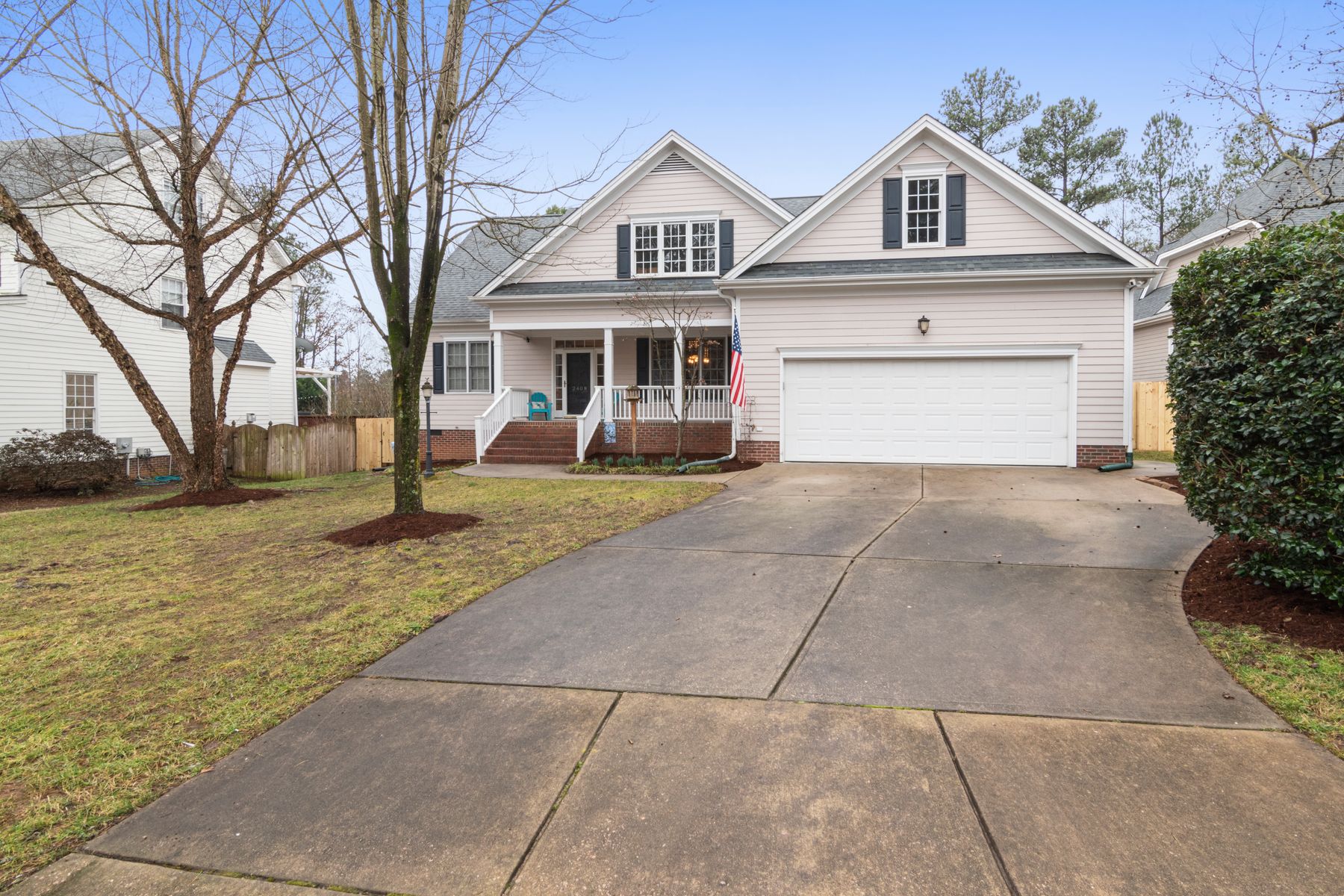
This is the fictional single-family rental used in our sample estimate. It gives the graph and the fee comparison below the same starting point.
Purchase price of $625,000, with an assumed $133,098 allocated to land.
Depreciable property basis of $491,902, after excluding that land.
Placed in service on June 15, 2025, with no separate furnishings or renovation pool in this example.
These figures describe an example, not a typical Basis customer or a prediction for another rental. Property price alone does not determine the result.
See how depreciation moves into earlier years
The gray line shows estimated depreciation without a study. The green line shows the cost segregation estimate for the same property. The large first-year increase is followed by lower annual deductions in the years shown.
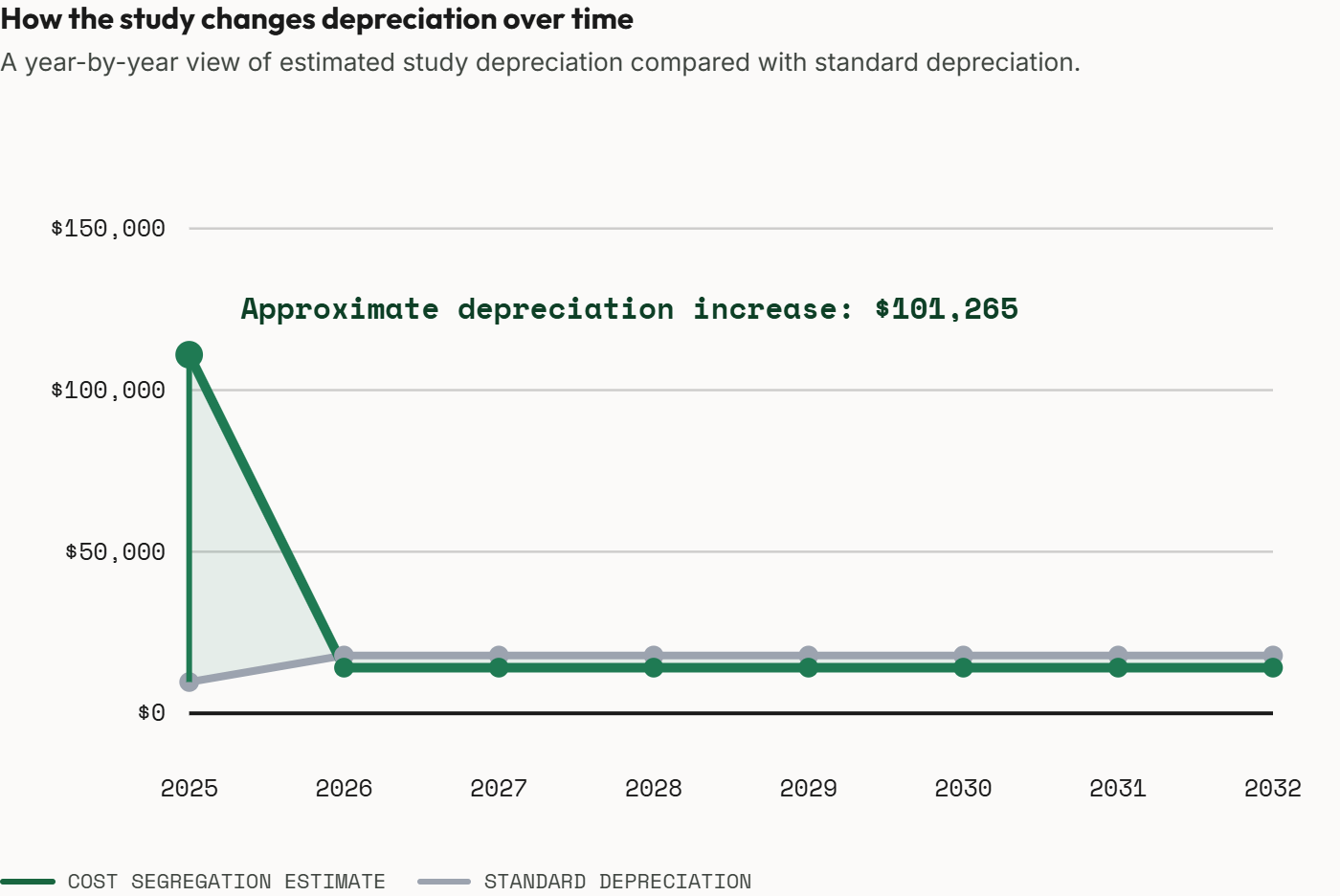

For this property, estimated first-year depreciation is $9,689 without a study, compared with $86,843–$135,064 with cost segregation. That is about $77,154–$125,375 in additional deductions. The graph's approximately $101,265 increase is the midpoint of that range, not a guaranteed study result.
The benefit is having deductions sooner. Whether that leaves more money available now depends on the owner's ability to use them. The graph does not show spendable cash or the property's complete lifetime tax outcome.
Compare this property's possible tax reduction with its study cost
For the next step, assume the owner can use all of those additional deductions in the first year at the sample's 35% federal tax rate. This is a tax-use assumption, not something the property estimate can confirm.
Possible reduction in federal tax
$27k–$44k approximately, from this property's additional first-year deductions.
Additional deductions of $77,154–$125,375.
An assumed 35% tax rate, with all those deductions usable that year.
An estimated tax reduction of $27,004–$43,881, before study-related fees.
This measures the change attributable to the rental's study, not the owner's entire tax bill.
Study-related costs in this example
$2,295 for one study and the assumed extra CPA work.
Basis study fee of $1,795 for one qualifying property.
An assumed $500 for extra CPA work, not a quoted CPA rate.
No other add-ons included. Any separately purchased prior-year or renovation service would increase this amount.
Use the actual quote for every service your property needs before deciding.
About $25k–$42k could remain after these fees
Subtracting the example's $2,295 in fees from the estimated tax reduction leaves approximately $24,709–$41,586 with the owner that year, compared with using the standard depreciation approach.
That is the potential payoff from this one rental under these assumptions. If the owner cannot use the deductions yet, the immediate tax reduction could be much smaller or zero even though the property's depreciation graph looks the same.
The estimate is preliminary. State taxes, other tax-return effects, and the tax treatment of the fees are not modeled here. Taking deductions earlier changes later deductions and can affect tax on sale, so this is not a lifetime savings calculation.
Would your tax bill actually fall this year?
Some owners cannot use additional rental deductions immediately. Tax rules may require them to carry the resulting losses into a later year. A large depreciation number can therefore come with little or no reduction in this year's tax bill. IRS Publication 925 explains passive activity and at-risk limits.
Ask your CPA, “With this study, how much less federal tax would I owe this year?” If the answer is “none yet,” the decision is about a possible future benefit while paying the study fee now.
A high salary alone does not mean rental deductions can reduce tax on your wages. Your rental income, existing losses, and participation can change the answer.
When the lower tax bill is not enough
If a study lowers this year's tax by only $1,200 but costs $2,295 including extra CPA work, you would spend $1,095 more this year than you would without it.
That may be a reason to wait. Future deductions can still have value, but they need to justify paying the cost today. The first comparison should be money you expect to keep against money you must spend, using your own tax situation.
A smaller rental can still be a good candidate
A purchase price below $500,000 does not automatically make a study too small to consider. What matters is the property's depreciable basis, eligible components, and the owner's tax position relative to the fee.
Two homes bought for the same price can produce different estimates. One may have more value in nondepreciable land. Another may include more qualifying site improvements or separately documented improvements.
Use supported figures when comparing the properties:
Start with the acquisition records or existing depreciation schedule.
Separate the land allocation from depreciable property.
Track later improvements with their own costs and dates.
Our guide to determining depreciable basis explains how to establish those starting numbers. A temporary land assumption can help with an initial estimate, but the completed study needs supported inputs.
Your ownership plans can change the answer
You expect to keep the rental
Taking a usable deduction earlier gives you more time with the cash. Consider what that timing is worth to you, whether it supports property reserves, reduces borrowing needs, or funds another investment.
Your CPA should also compare the later depreciation schedules. Moving a deduction forward changes the deductions available in future years.
You expect to sell soon
Have the sale modeled before ordering. Depreciation affects adjusted basis and can affect how gain is taxed, including depreciation recapture. The result depends on the assets and transaction. IRS Publication 544 covers those rules.
There is no universal holding period that makes every study worthwhile. A near-term sale simply makes the later tax consequences especially relevant to the decision.
You bought the property in an earlier year
Bring the filed depreciation schedule. An existing rental may still warrant a study, but applying the results can involve separate analysis or an accounting-method change.
Ask your CPA to price that work before comparing the benefit with the fee. Basis's base study does not include Form 3115 preparation or tax-return preparation.
When to proceed and when to wait
The expected tax reduction comfortably exceeds the fees. Confirm the property inputs and tax treatment with your CPA before proceeding.
You already have rental losses you cannot use. Establish when additional deductions would become usable.
The expected tax reduction is close to the fees. Refine the inputs and include extra CPA costs before buying.
You plan to sell soon. Compare the current benefit with the expected sale consequences.
Your records are incomplete. Gather the missing information before paying for a study.
A study should solve a financial problem you actually have. If the projected benefit barely covers the fee, small changes in the assumptions can erase the advantage.
See what you would be buying
If the numbers support a study, the next question is what you get for the fee. Basis combines visual property intake, engineer review, and an owner-and-CPA report package for $1,795 per qualifying property.
Get through the property questions clearly

Describe your rental with visual choices, save your progress, and return to your answers. Your property dashboard keeps the intake and requested corrections together.
Understand the report before you pay
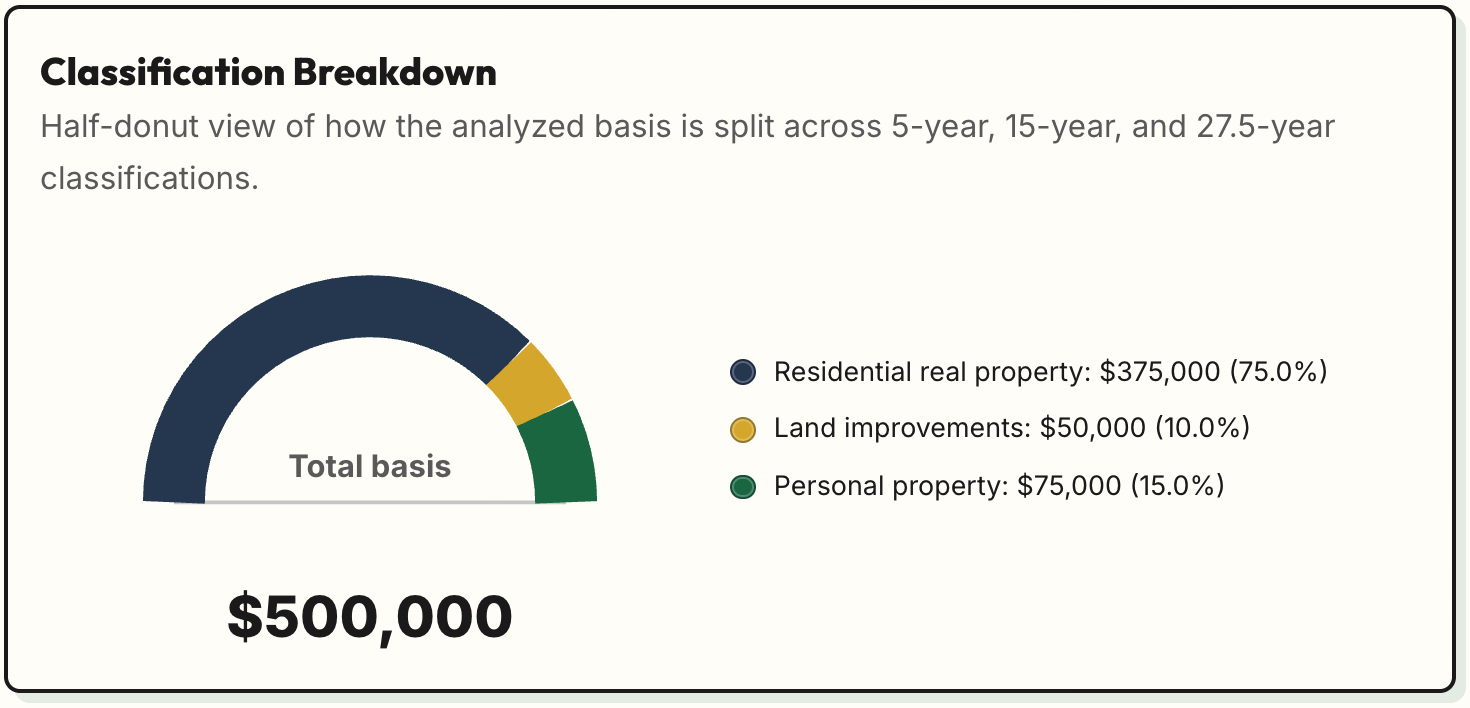
Owners get plain-English explanations. CPAs get component allocations, depreciation schedules, and supporting methodology to evaluate for the return.
Engineers check the analysis before approval
Review is included in the standard study. Engineers check property facts, modeled costs, classifications, and schedules, and can correct the analysis before approval.
Roel A. Vicerra, MBA, leads the methodology with more than 15 years of cost segregation experience, including a decade at KPMG. Meet the team.
The standard scope includes one reasonable requested revision within 30 days and three years of limited report-related audit support. Tax-return preparation, Form 3115 preparation, and IRS representation are excluded. Compare the price and included services.
Common questions from rental owners
Is cost segregation worth it for just one property?
It can be. The number of properties you own does not settle the question. Compare how much the study could lower your tax bill with its complete cost and your ownership plans.
Does a large estimate mean I should order immediately?
No. First confirm the property inputs and how much of the estimated deduction you could use. The estimate helps screen the opportunity; the completed study provides the analysis, and your CPA determines the return treatment.
Should I wait until I have all my records to try the estimate?
You can explore an initial estimate with the information available. Treat uncertain inputs as assumptions, then replace them with supported amounts before relying on the result or finalizing a study.
Find out whether your rental is worth a closer look
Start a free Basis estimate. No account or payment is required to begin. Share the result and its inputs with your CPA, and ask them to compare your tax bill with and without a study, including the study fee and any extra CPA work.
If the numbers support proceeding, you already have a published price and a sample report to review. If they do not, you have answered the question before buying.
Stock photo source: Pexels