Start with the property and study scope
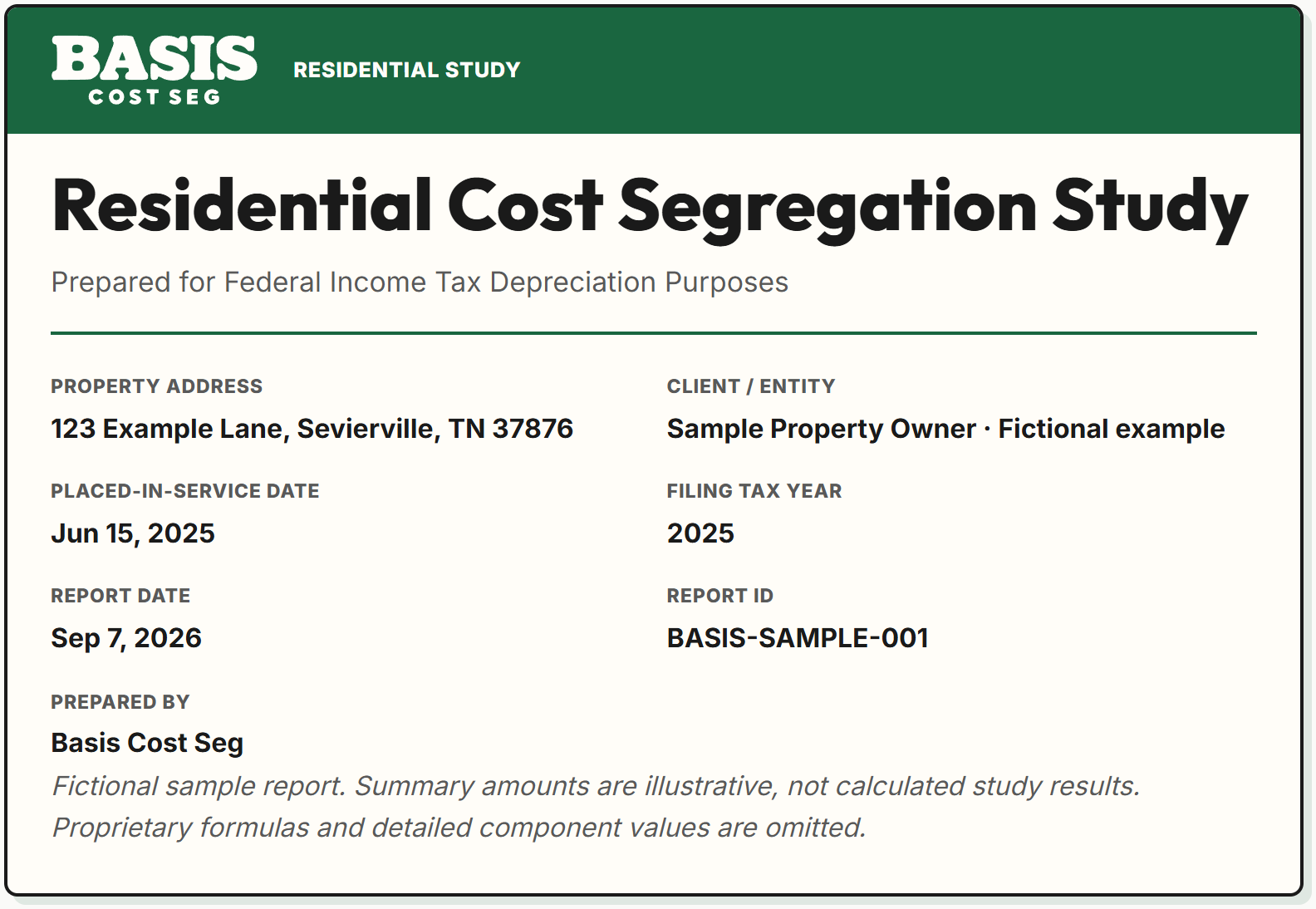
A useful report identifies the property, relevant dates, assumptions, and scope of the work. Your tax professional needs to understand what was analyzed before relying on a depreciation schedule.
Follow the allocations and schedules
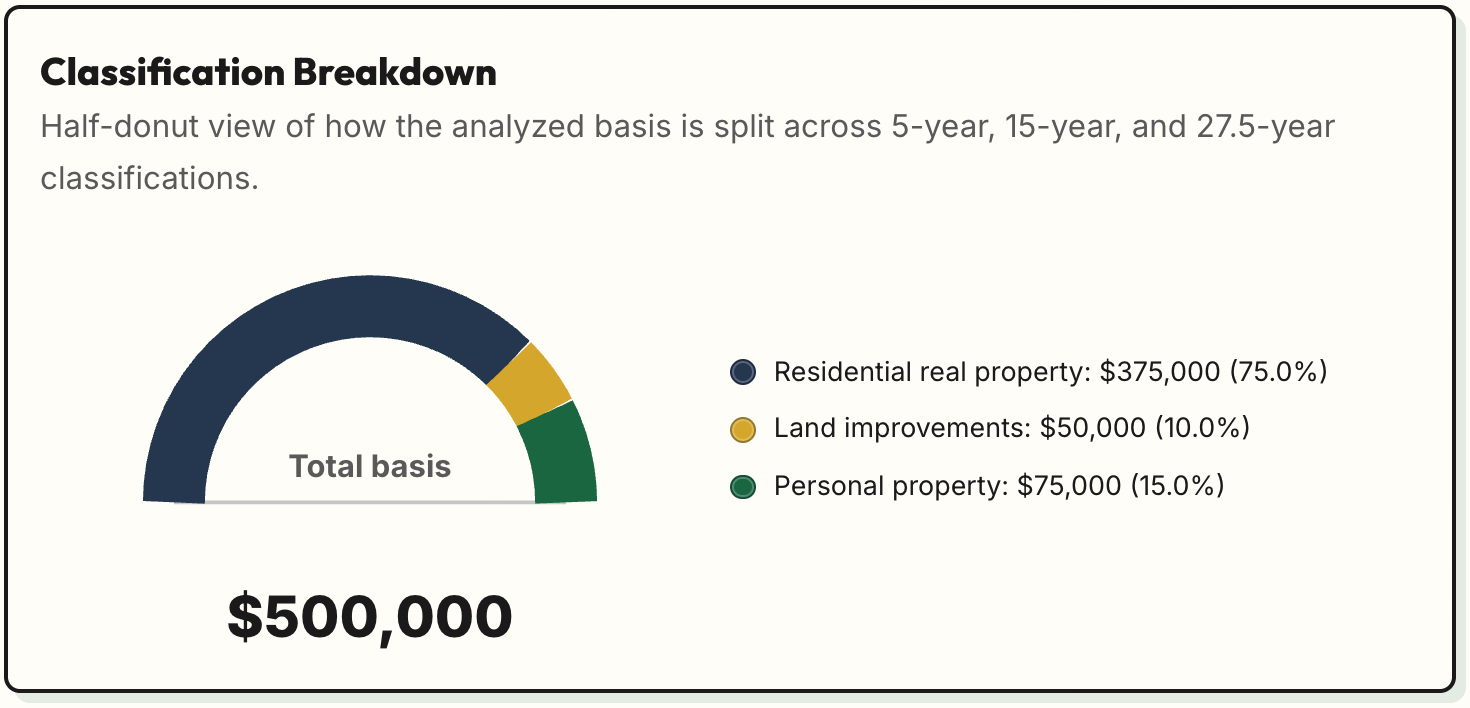
The study explains how eligible property components are classified and reconciled with the depreciable basis. The report’s schedules let your tax professional examine the treatment and timing. An allocation chart alone does not establish the tax deduction available to you.
What to review with your CPA
- Purchase price, land allocation, and other basis adjustments.
- Placed-in-service dates and the property’s rental use.
- Component classifications, recovery periods, and depreciation schedules.
- Supporting methodology, assumptions, and reconciliation.
- Loss limitations, prior depreciation, and any filing steps outside the study.
Bring your existing depreciation schedule when applicable. Our CPA review guide explains how to organize that conversation.
Open the interactive sample
The full sample shows the report’s organization and selected details. It remains a demonstration rather than a report prepared for your property.
Start with your property
Use the free estimate to explore potential accelerated depreciation, then ask your tax professional whether the deductions would help in your situation. There is no account or payment required to start.