Find the shorter-life assets in your rental with a cost segregation study prepared by Basis and reviewed by engineers.GET YOUR FREE ESTIMATE →Explore the study ↘Free to explore. No account needed.
The structure is only the start.
Explore inside and outside to see which parts of your rental may qualify for faster depreciation.
Furnishings, appliances, and finishes.
Furniture, appliances, and qualifying finishes may have shorter recovery periods, often five or seven years.
Improvements beyond the walls.
Qualifying fencing, driveways, and landscaping may use a 15-year recovery period. Land itself is not depreciable.
One purchase. Several kinds of property.
A study separates qualifying shorter-life assets from the building. This fictional allocation shows how those parts can fit together.
ILLUSTRATIVE PURCHASE PRICE$550,000
Depreciable basis $440,000
Already depreciating furniture or improvements separately? Reconcile the study with your existing schedule so the same cost is not deducted twice.
If $88,000 were fully deductible in a year when the owner could use the deduction at an assumed 35% marginal tax rate, the simple tax effect would be $30,800. That is not the incremental benefit over ordinary depreciation.
Actual timing depends on applicable bonus depreciation rules, acquisition and placed-in-service dates, prior depreciation, and loss limits. This example excludes study fees, state differences, and possible recapture on sale. Compare your estimate with your existing schedule and review it with your CPA.
Your property, documented. Your study, engineer reviewed.
See the preliminary opportunity for your property.
2
Tell us about your property
Purchase your study, answer the property questions, and upload supporting records.
3
Receive your reviewed study
Download your completed study and discuss filing with your CPA.
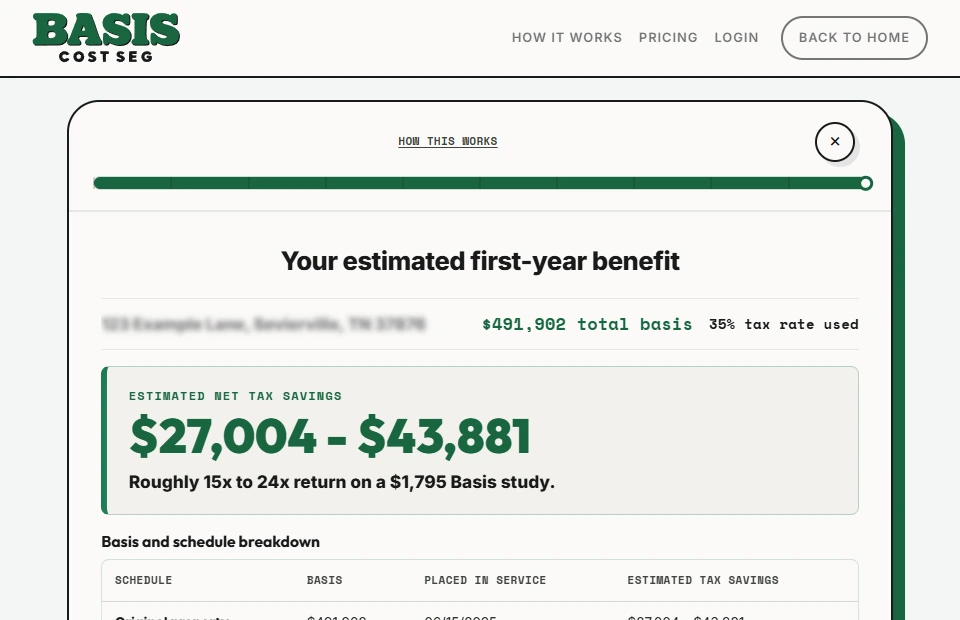
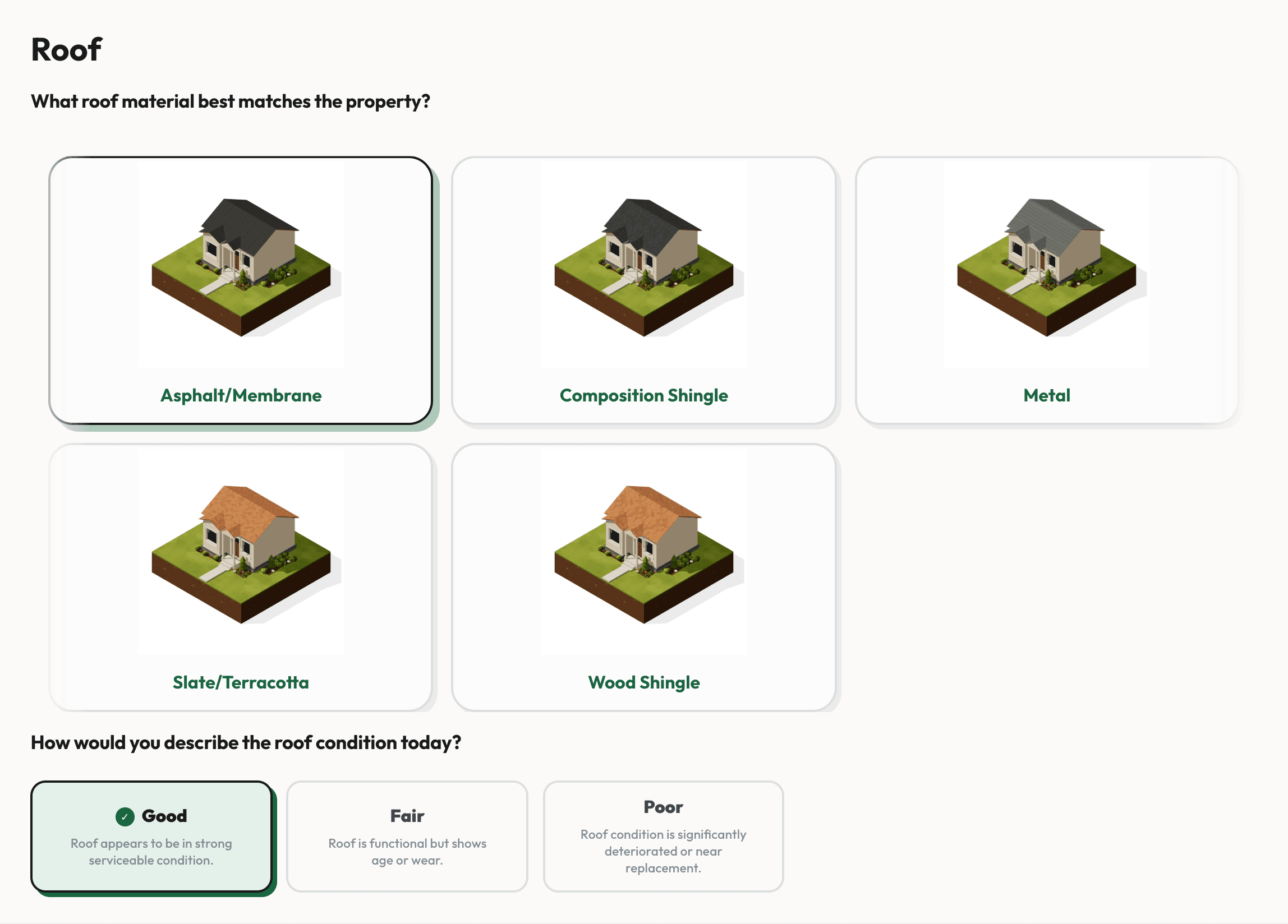
Actual Basis screens with fictional inputs. Estimate results are illustrative; the public report sample omits proprietary component detail.
Two questions for your CPA.
Confirm your building’s classification and when you can use the deductions.
Does the building use 27.5 or 39 years?
Long-term residential
27.5 years
Short-term rental
27.5 or 39 years
Under the general depreciation system, short-term rental classification depends on dwelling-unit and transient-use facts, including the 80% rental-income test. Confirm your building’s treatment with your tax professional.
Your average guest stay, participation, and other loss limits affect when you can use a deduction.
Rental losses are generally passive. Discuss these factors with your CPA.
Average stay
For passive-activity purposes, an average customer stay of seven days or less is one exception to rental-activity treatment.
Participation
Material participation then matters. Your involvement in the rental needs to be evaluated separately.
Other limits
Other loss limits may still apply. Personal use can also limit deductions.
A study does not establish that rental losses can offset wages or other income. Your CPA evaluates that separately.
Material participation and records. Two of the IRS tests are participation exceeding 500 hours, or exceeding 100 hours with participation at least equal to that of any other individual. Other tests and special rules also exist.
Keep records of operational work, such as guest communication, turnover coordination, and repairs. Investor-only work can be excluded. A dated log is useful, but the IRS allows other reasonable evidence of participation.
It can. Furnishings and qualifying improvements may be eligible for shorter recovery periods. The property’s facts and your ability to use deductions determine the value of a study.
Basis completes standard residential studies remotely using your property information and supporting records. Contact us if your property has unusual features or you are unsure it fits the service.
A study may still identify eligible shorter-life property, but loss limits can delay when deductions benefit you. Ask your CPA about your activity’s classification and any carryforwards.
Basis includes property intake, study preparation, engineer review, and a report package for your CPA. Compare scope and review process alongside price in our provider comparison.
No. Your tax professional determines your filing position, including building classification, material participation, and the use of losses. Basis prepares the cost segregation study for that review.
See what your rental could qualify for.
Get a preliminary estimate to review with your CPA.
General education only, not tax, legal, or accounting advice. Results and deduction timing depend on your property and tax circumstances. Review your estimate, study, and filing position with a qualified tax professional.



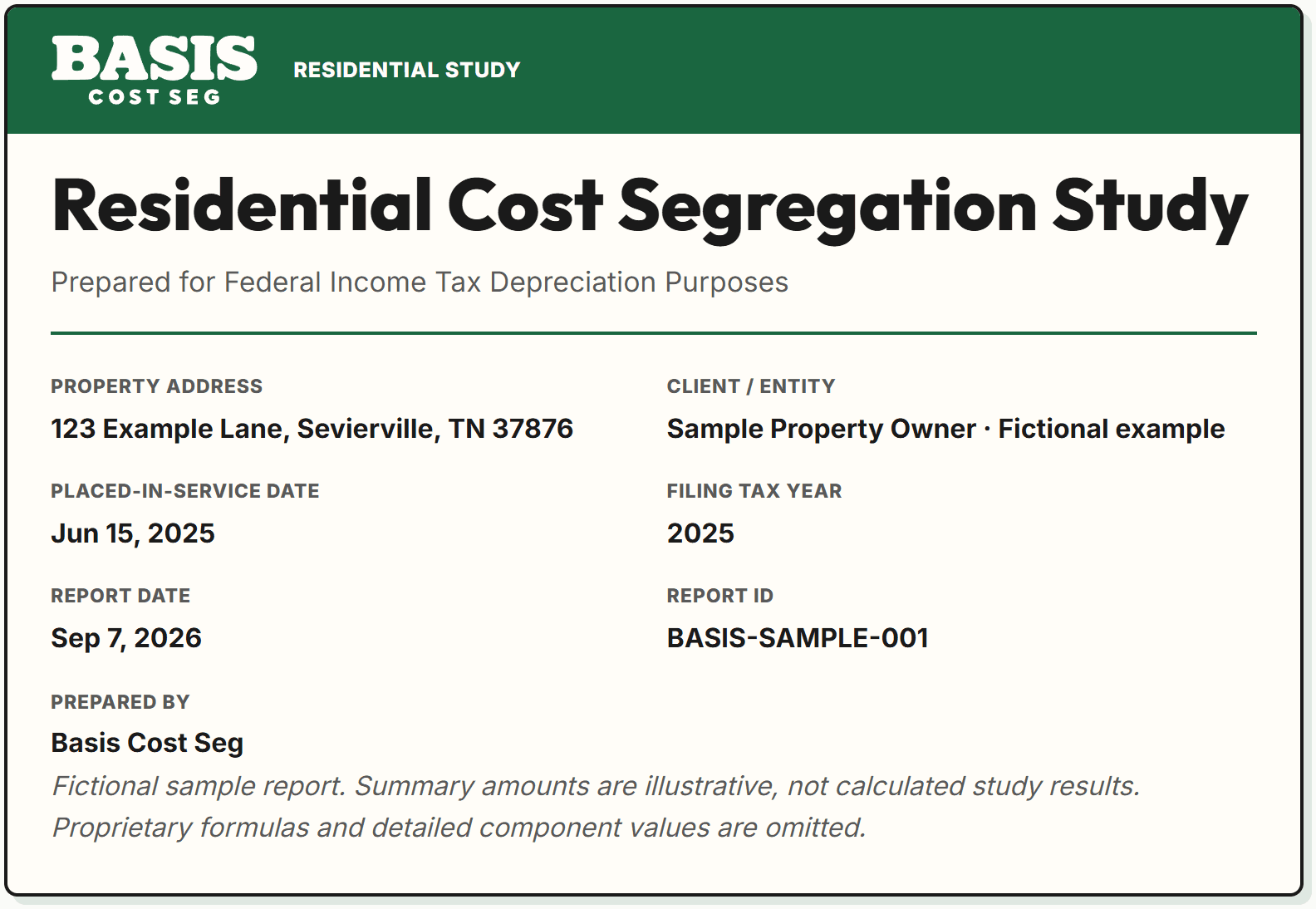 Explore a fictional example report